Rethinking Your Period: Can Menstruation Be Sacred?


Rethinking Your Period: Can Menstruation Be Sacred? Discover how to transform your relationship with menstruation from burden to sacred practice. Discover how to honor your menstrual cycle through mindfulness, nutrition, and spiritual connection in this empowering guide to menstrual wisdom.
Updated on August 28th, 2025.
Menstruation as a Spiritual Practice
As a nutrition consultant who works with women, I’ve witnessed countless clients apologize for scheduling around their periods, dismiss their cyclical needs, or treat their monthly flow as an inconvenience to push through. Yet what I’ve discovered through my own journey and years of supporting other women is that menstruation can be one of our most profound spiritual practices, if we choose to see it that way.
For too long, our culture has taught us to hide, medicate, or simply endure our periods. We’ve learned to see them as interruptions to productivity rather than invitations to a deeper connection with ourselves. But what if I told you that your menstrual cycle is actually a monthly opportunity for renewal, introspection, and spiritual growth?
Shifting from Shame to Sacred
My own relationship with menstruation transformed when I stopped seeing it as something my body was doing to me and started understanding it as something my body was doing for me. Each month, my uterus creates and releases, mirroring the cycles of nature around us, the phases of the moon, the changing seasons, the eternal dance of creation and release.
This shift in perspective didn’t happen overnight. I had to unlearn years of conditioning that taught me periods were shameful, messy, or signs of weakness. Instead, I began to see my cycle as a sacred rhythm, a monthly invitation to go inward and connect with the wisdom of my body.
The Power of the Menstrual Cycle
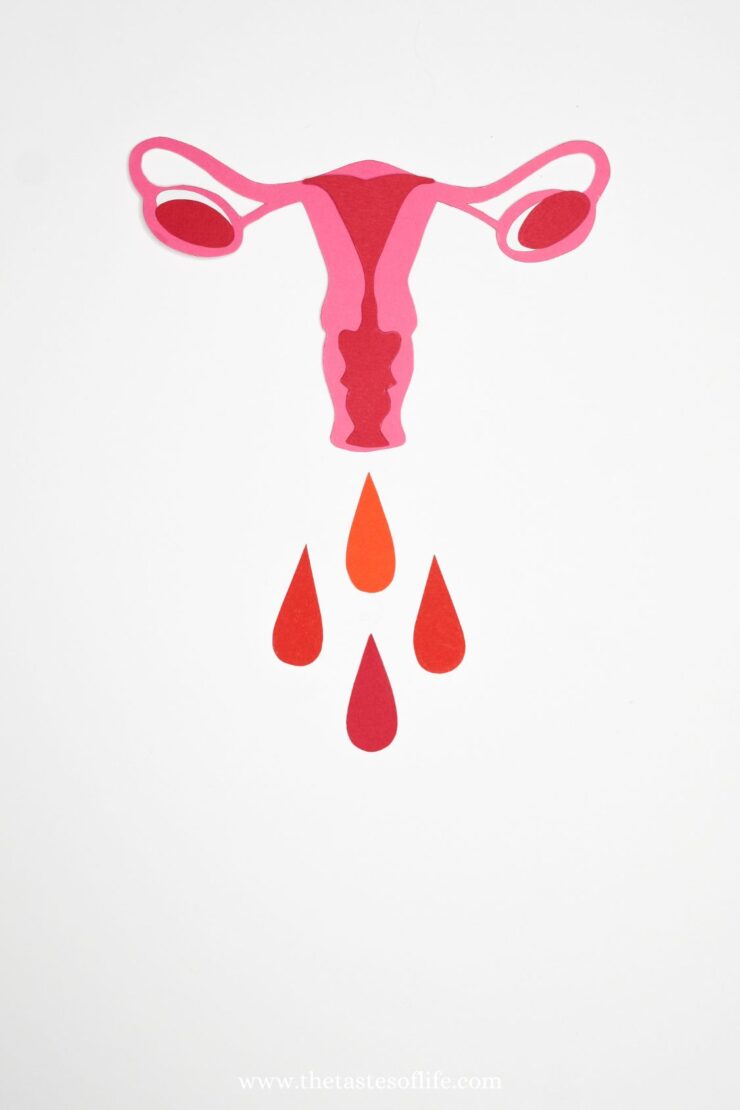
The menstrual cycle encompasses a range of aspects beyond what is typically covered in biology as a discipline. The concept of the menstrual cycle cannot be ignored, as it significantly impacts one’s life. Women’s life is built around the menstrual cycle, whether you acknowledge it or not, whether you recognize its significance or not. Every individual who lives under the same roof experiences the effects of the women’s menstrual cycles. Therefore, we should pay attention to it.
In most women, the menstrual cycle exhibits magical features. For instance, every cycle provides a woman with an opportunity to learn essential information about her body and understand her unique healing needs. Additionally, each period offers a woman the opportunity to experience both personal and spiritual growth. Each part of the cycle is teaching you something about yourself.
The failure of women to connect with their cycle and the habit of overlooking essential body messages contribute to distressing symptoms in women today during their menstrual cycle. Some of the messages inform us about important aspects such as emotional or physical needs and imbalances. Symptoms triggered by menstrual cycles usually alert us to the presence of harmful substances or factors in our lives, ranging from what we consume to the people we associate with, where we work, and the amount of stress we encounter.
Basic Facts About the Menstrual Cycle
The menstrual cycle is affected by the moon phases. The menstrual cycle in women is compared to the phases of the moon, also known as lunation cycles. These two cycles are similar, for instance, in ancient days, ovulation in women occurred when the moon was full. The menstrual flow started when the moon was dark. We have a special gland, the pineal gland, located in the brain, which communicates with the ovary via hormones to release an ovum.
The release of an egg is based on the amount of light that our brain senses during the night when we are sleeping. If there is too much light at night as a result of the full moon, we experience ovulation. Women living in rural areas and in traditional communities are more likely to synchronize their menstrual cycles with the phases of the moon. Experiencing ovulation during the full moon implies that we have menstrual flow when the moon turns dark, a moment when our energy is more inwardly focused. This connection is based on the premise that both the lunation and menstrual cycles average 28 days.
Our initial predisposition to be in sync with the lunar cycle has been disrupted by modern lifestyles. This is because we experience constant bright lights and artificial lights nowadays, which can confuse our body. Over time, the biological structure of our fertility cycles continues to change, making them significantly different from the initial cycles. You can imagine the level of disruption this causes to us. We should not only focus on the lunation cycle as our guide, but also synchronize with others at certain points in life.
The majority of women are unaware of the relationship between the moon phases and their menstrual cycle. They have no idea about the phases of the moon. If they observe the moon continuously as it follows its path in the sky and undergoes waxing, they will eventually synchronize their menstrual cycles with the phases of the moon. They experience ovulation at the time the moon is full and bleed when the moon darkens or vice versa based on their stage in life. However, synchronization can change as a result of external factors.
A woman can ovulate twice a month. All women can ovulate twice during the cycle at a single phase of the moon, commonly known as Lunar Ovulation. Many pregnancies that occur by the time women believe they are not fertile occur during the lunar ovulation period. This kind of ovulation usually happens when the lunar returns at the same time as your regular cycle. The second ovulation occurs whenever the lunar cycle returns, except during full breastfeeding. However, this does not happen in all women. A woman can identify her lunar return, especially as you ovulates the second time each month. You need to identify the various phases of the moon that correspond to the day you were born.
Women were considered the World’s first Shamans. The word “shaman” was the title given to the medicine people, both men and women. Shamans utilized unique powers and special talents to heal individuals suffering from various diseases. They used their unique abilities to gather information from hidden realms, thereby facilitating the healing of the sick. Shamans used drumming and trance to communicate with nature to retrieve useful information. The majority believed that men were the only ones entitled to perform the role of a shaman; however, anthropologists and archaeologists discovered that the earliest shamans were women. This could be true because women often experience prophetic dreams and strategic communications at different times during their menstrual cycles.
It is believed that menstruation and ritual share a common namer’ku, which is a Sanskrit word. The word “mens” which forms the root of menstruation, is similar to that of the month, moon, and measurement. In ancient times, the calendar and the estimation of time were based on women’s menstrual cycles.
Therefore, the menstrual cycle is a cycle within a cycle. The most significant cycle in a woman is built around her life. In this case, her life endeavors are compared to the seasons of the Earth. For example, spring represents the Maiden, Autumn means the Maga, and then Winter and Summer represent the Crone and Mother, respectively.
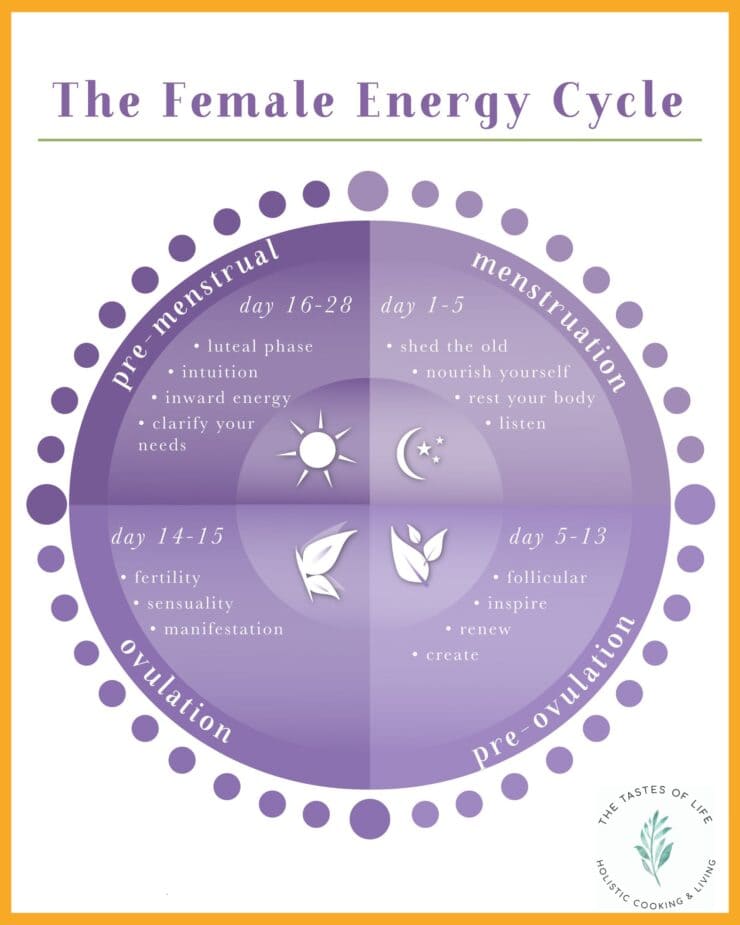
Each cycle that occurs in women is similar to other periods; what differentiates them is their length. The stages in cycles comprise of birth, growth, full bloom, harvest, decay, death, and rebirth. The menstrual cycle falls under the same category. It is divided into four distinct quarters, just as the Earth’s seasons. The cycle is based on weeks, with phases 1, 2, 3, and 4, which correspond to the four quarters.
Women who experience a period consistently shorter or longer than 28/29 days imply that such women have their first half either shortened or lengthened. Each week, the fertility cycle is different, just as we have different seasons on Earth. Every week during this period has unique features that create opportunities for spiritual practice among women, and that is what I am speaking of in this article. For instance, the first week represents spring energy. Week two resembles the summer season. Finally, weeks three and four represent autumn and winter, respectively. The teaching, messages, and energy levels vary from week to week.
Phases of the Menstrual Cycle
Week One (1-7th day): Menstrual Phase (Inner Winter): This is our time of release and renewal. Like trees shedding their leaves, we release what no longer serves us. I’ve learned to honor this phase by creating space for rest, reflection, and gentle movement. It’s become my monthly retreat, a time for journaling, meditation, prayer, and listening deeply to my inner voice.
Week Two (8-14th day): High Energy Creative Phase. Follicular Phase (Inner Spring): As our bodies begin preparing for potential new life, we can harness this energy for new beginnings in our own lives. I use this phase for planning, setting intentions, and beginning new projects. A natural optimism and creativity emerge when I align with this energy.
At this level, the summer energy facilitates the building of sexual, physical, and creative energy, allowing it to reach its peak during ovulation. You experience intense creative feelings and heightened awareness of yourself and those around you. You get attracted to the physical appearance, you will hear many saying, “I feel happy, excited, full of energy,” “I can do anything!”
Week Three (15-21st day): Coming Down and Harvest Phase, Ovulatory Phase (Inner Summer): This is our time of full expression and connection. I feel most social, communicative, and radiant during my ovulation cycle. It’s when I schedule important meetings, social gatherings, and any activities that require me to be “on.”, the stage that relies on autumn energy.
In most cases, the outcomes of ovulation, mainly known as post-ovulatory descent, may be accompanied by failure or pride. This implies it can be either positive or negative, depending on the woman. For instance, some women may experience elation, while others may feel failure; this variation is caused by the ovum dying unfertilized. You will hear some women saying, “I lost my chance” a situation that makes them feel less important. However, some may feel comfortable and proud of what they have achieved. Therefore, it is normal for women to feel a sense of regret or relief during their cycle. This occurs when they miss the pregnancy, literally or metaphorically.
The desire for change, especially in ways or things that are no longer useful to you, should be implemented during this stage.
Week Four (22nd- 28th day): Distillation and Clarity Phase. Luteal Phase (Inner Autumn): As we move toward release, this phase invites us to harvest the wisdom of the cycle. I use this time for completing projects, organizing, and preparing for the introspection that menstruation brings. Typically, you may feel content with your position in life or show no regrets. Lessons from this cycle are available to be seen and felt, like being ready to forego some things and surrender. You may lose personal interest in others and experience emotional discrepancies that are inwardly focused.
The Pill
For too long, our culture has taught us to hide, medicate, or simply endure our periods. We’ve learned to see them as interruptions to productivity rather than invitations to a deeper connection with ourselves. This disconnection has been amplified by the widespread use of hormonal birth control, which suppresses our natural cycles and keeps many women from experiencing the rhythmic wisdom of their bodies. While the pill serves important purposes for many women, it’s worth acknowledging that generations of women have grown up without ever knowing their natural cyclical patterns, the subtle shifts in energy, creativity, and intuition that flow with our hormones. This pharmaceutical intervention, while offering reproductive control, has inadvertently severed many of us from one of our most fundamental biological rhythms. But what if I told you that your menstrual cycle, when experienced naturally, is actually a monthly opportunity for renewal, introspection, and spiritual growth?
Want to save this recipe?
Here are some ways to align with your menstrual cycle.
Week one.
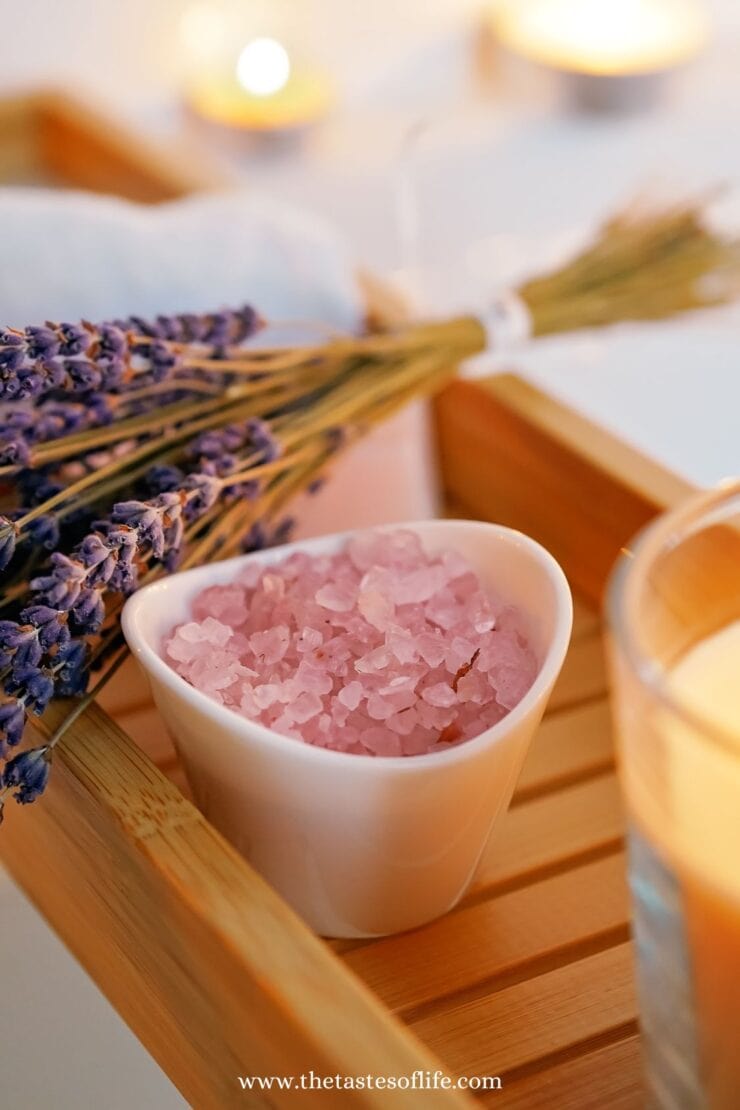
Retreat from the hustle and bustle of the world, even for only a night. Take a bath with essential oils. Give rose, clary sage, and geranium a shot.
Letting go ceremonies are great. If your moon happens to be in a full moon, that is an excellent opportunity to perform a small ceremony. Connect to your womb and listen. Drop deep and dig deep. You can work with gems like a carnelian.
Moonstone: provides an adjusting and recuperating energy, particularly for the emotions that may be in an open and sensitive space. It aids the parity and attention to our hormones in their “move” through our cycle. It is also a perfect stone to wear during one’s blood time, as it helps us remember our connection with the moon and all her rhythms. Moonstone consoles us when we are in withdrawal.
Explore different avenues for envisioning by making specific inquiries you have always wanted to ask.
Conjure a particular Goddess. A prime example to be with you during your darkest times, perhaps Maeve or Kali.
Draw or paint.
Reflect – with or without inquiries, and focus on what you will relinquish with your blood this cycle.
Engage in light exercise, such as strolling in nature, practicing yin yoga, or yoga nidra.
Feed yourself well.
Utilize different clothes at blood time, similar to those with a red shade. Utilize red towels.
Be benevolent to yourself – run with your menstrual flow! Make Blood Prayers – gather your blood and offer it to the Earth. The Earth transmutes everything that benefits her; your petitions for your new cycle are made fresh from that.
Week Two.
Apply creative vitality, make something at that time. Express your sexuality, be liberal, happy and free with your expression. Commend the dynamism of your ovulation (just like you would the full moon). Devote your egg to something you wish to give the creative life power to.
Week Three.
Appreciate what you have accomplished, made, and prevailed in this cycle, and let go of what you haven’t. Try not to beat yourself up. Begin to see the things that aren’t working in your life and prepare to release them with your blood. Try not to begin any new undertakings; instead, complete things off.
Week Four.
Be prepared as you approach your period; adjust your plans accordingly.
Cook in anticipation of your withdrawal time. Make a pot of healthy soup that you can’t do without.
Take a step back and begin envisioning how you want your next cycle to go.
The entire menstrual cycle is a catalytic procedure in itself, to discharge, to survive in a recurrent transmutation in which the past is shed and the new is welcomed.
Identify and respect the Rites of Passage and introduce your children to womanhood. Rites of passage of becoming a woman are essential teachings for young girls. They prepare them to enter new roles of womanhood. Recall the time you had your first menarche and what it taught you about being a woman of substance. Identify and learn about the parameters in perimenopause and menopause; these are essential stages of a woman’s transformation.
Honoring the Wise Woman Within
In many indigenous traditions, menstruating women were considered to be at the height of their spiritual power. They would retreat to moon lodges or red tents, not because they were unclean, but because they were considered too powerful for everyday activities. During menstruation, the veil between worlds was thought to be thinnest, making it an ideal time for prophecy, healing, and spiritual insight.
When I approach my period with this understanding, everything changes. Instead of pushing through with my regular routine, give yourself grace, create space for the wisdom that wants to emerge. I’ve received some of my most profound insights, creative breakthroughs, and spiritual guidance during my menstrual time.
The Ripple Effect
When we begin to honor our menstrual cycles as sacred, it creates ripples that extend far beyond our personal experience. We model for our daughters, sisters, and friends that periods are not shameful secrets but natural rhythms worthy of respect. We challenge workplace cultures that ignore women’s cyclical needs. We reconnect with ancient wisdom that saw menstruation as a source of power rather than weakness.
An Invitation to Begin
If you’re ready to transform your relationship with menstruation, start small. Choose one practice that resonates with you, such as tracking your cycle with greater awareness or creating a simple ritual to mark the beginning of your period. Notice how it feels to approach your menstruation with curiosity rather than dread.
Your period is not an interruption to your spiritual life! To the contrary, it is your spiritual life, showing up monthly to remind you of your connection to the larger rhythms of existence. In a world that often disconnects us from our bodies and natural cycles, menstruation calls us back home to ourselves.
The next time your period arrives, try greeting it not with a sigh of frustration, but with a whisper of gratitude: “Welcome back, old friend. What wisdom do you bring me this month?”
Your body and your spirit will thank you for listening.
The menstrual cycle is a valuable gift, especially when you are aware of it. It occurs regardless of the level of energy we possess. Therefore, you must have enough awareness around it, so instead of feeling like the period is a drain on our body, we will use it for empowerment.
To conclude, numerous transformational changes occur in women during their menstrual periods. I want you to think about this, though. If all women were to come together through prayer and purposeful intentions, perhaps even resynchronizing our cycles with the moon and with each other, we could harness this energy to heal the planet.
Love My Content? Buy Me a Coffee!
Creating these resources for you is my passion, and I love hearing how they’ve helped you on your health journey. If you appreciate my content and want to support my work, you can buy me a coffee to help fuel more tips, recipes, and inspiration. Every little bit means the world to me!