
Slow-Cooked Pork Pot Roast

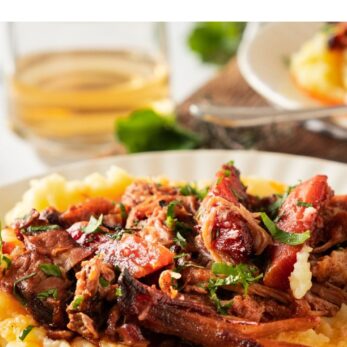
This slow-cooked pork pot roast is the ultimate cozy meal, made with tender pork chuck, red wine, bone broth, fresh herbs, and hearty vegetables. A comforting fall and winter recipe perfect for Thanksgiving dinner, Christmas dinner, or any night you crave a delicious home-cooked meal.
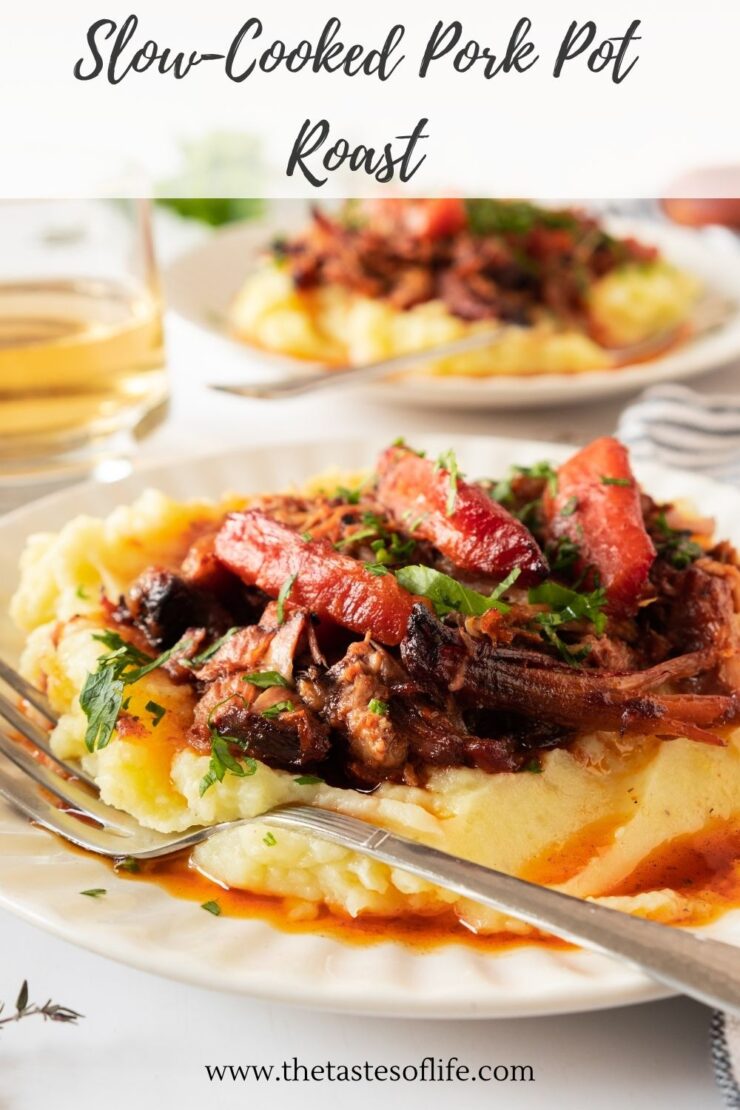
Pork Pot Roast: The Ultimate Cozy Meal
I love pot roast slowly cooking on the stove or in the oven, making a house feel like home. We Poles love pork, and we cooked a lot of it as kids. The aroma of caramelized onions, rosemary, thyme, and red wine filling the kitchen is enough to make me hungry long before dinner is ready. And honestly, that is one of my favorite things about cooking. It is not just about what ends up on the plate. It is about the anticipation, the warmth, and the simple pleasure of gathering around the table for a delicious meal.
As a nutrition consultant and chef, I love creating satisfying, flavorful meals that bring comfort without requiring complicated techniques or a long list of ingredients. This pork pot roast is a perfect example of one of my family recipes. A few humble ingredients, a little patience, and the magic of slow cooking turn a beautiful piece of pork into something incredibly tender and full of flavor.
I especially love making this recipe when the weather turns chilly. It is the kind of fall recipe that transitions effortlessly into winter, and it’s just as welcome at a Thanksgiving table as it is for a relaxed Christmas dinner with family and friends.
My philosophy is simple: great food does not have to be complicated. It just needs good ingredients, thoughtful seasoning, and enough time for the flavors to develop.
Why You Can Trust My Version
As a chef, I believe the best recipes come from understanding how ingredients behave, not simply following instructions. When I make a pot roast, I focus on the small details that make a big difference: browning the meat properly, building flavor in the same pot, and giving the connective tissue time to soften.
I also believe that a comforting dish should taste wonderful before you even think about its nutritional benefits. Pork provides protein and important nutrients, while bone broth contributes savory depth. Vegetables, herbs, and a splash of red wine create a rich, flavorful sauce.
The secret is that most of those hours are hands-off. The oven does the heavy lifting while you go about your day.
Why This Pork Pot Roast Recipe Works
First, we brown the pork. This creates a deeply savory crust that adds complexity to the finished sauce. Skipping this step is tempting when you are in a hurry, but I would not recommend it. Those browned bits at the bottom of the pot are little flavor treasures.
Next, we build the foundation with butter, onions, and carrots. The onions soften and turn golden, while the carrots add natural sweetness. Tomato paste adds concentrated umami, and red wine brings acidity and depth.
Finally, add bone broth, rosemary, and thyme, then cook slowly until the pork is fork-tender.
My favorite part? The sauce. I want it rich, glossy, and savory, with just enough acidity to balance the sweetness of the vegetables. If the sauce is delicious enough to spoon over every bite of pork and mashed potatoes, you know you have done something right.
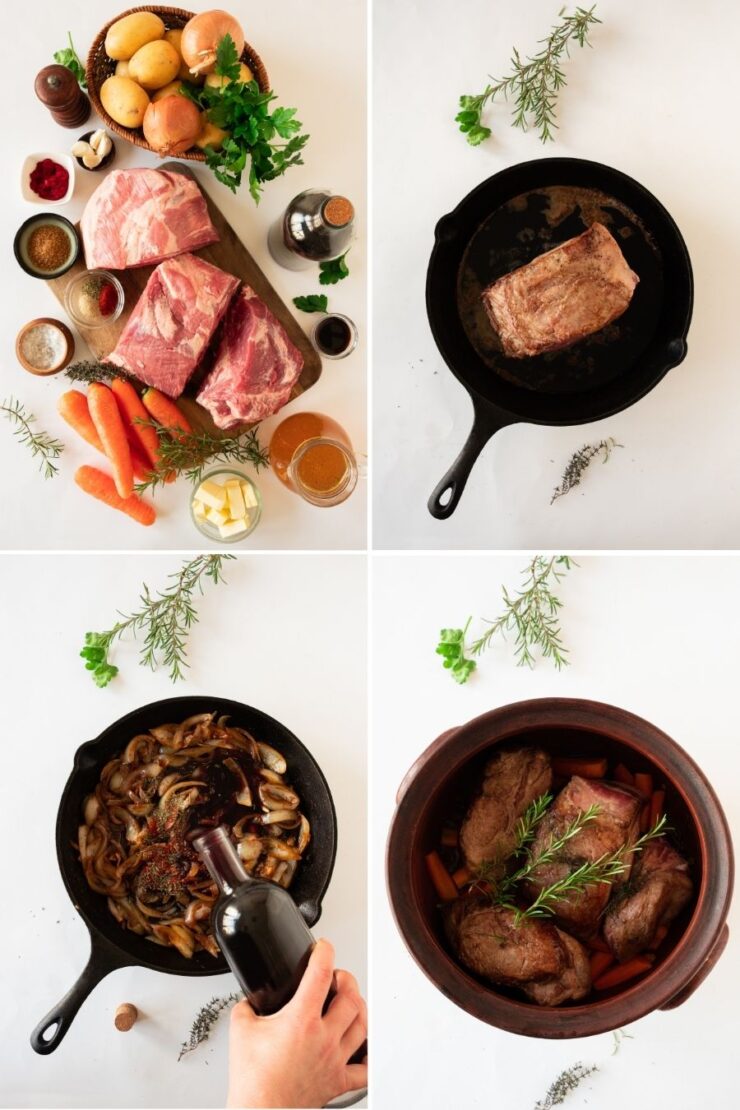
Ingredients for Slow-Cooked Pork Pot Roast
This website may contain affiliate links, which means I may earn a small commission at no extra cost to you if you purchase through these links. As an affiliate, I only recommend products or services I genuinely use and love. Check the affiliate disclosure here.
Did you know?
Tougher cuts of pork often make a better pot roast than leaner cuts. Cuts like pork shoulder contain collagen, a connective tissue that gradually breaks down into gelatin during slow cooking. This is what gives the meat its tender texture and helps create a rich, silky sauce. The secret isn’t cooking the meat faster or turning up the heat; it’s giving it enough time.
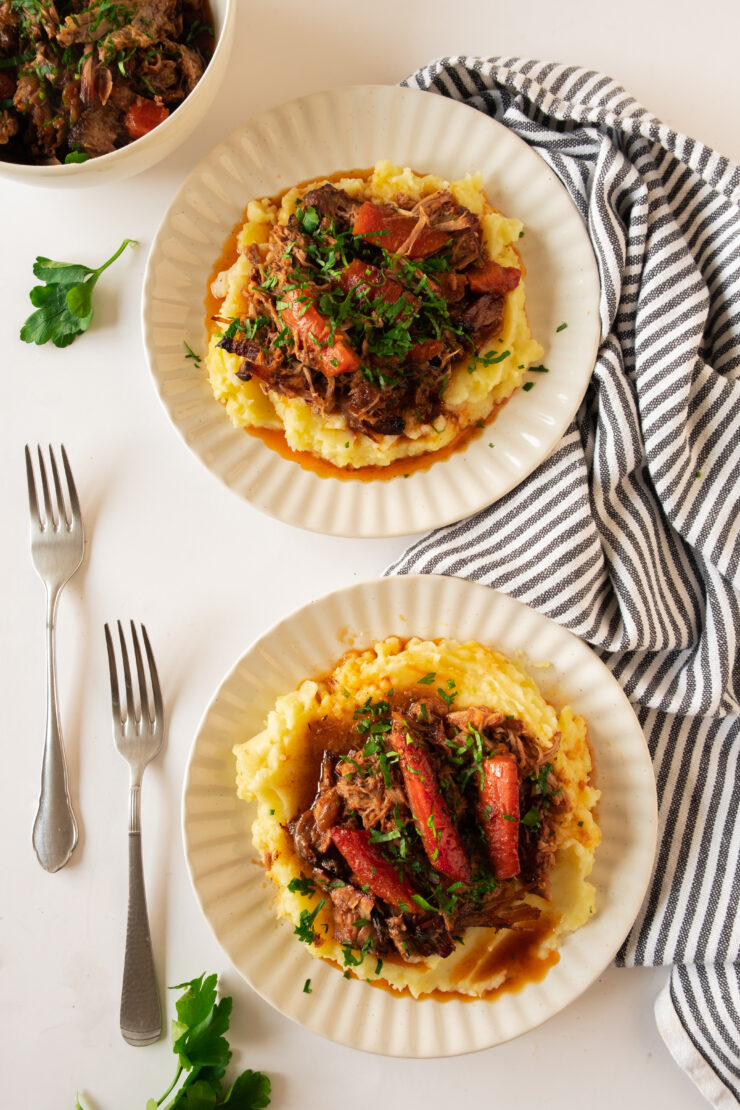
How to Make Slow-Cooked Pork Pot Roast
- Prepare the Pot Roast: Season the pork meat generously with salt and black pepper. Heat butter in a large cast iron pan or a Dutch oven over medium-high heat. Sear the roast on all sides until browned (about 4–5 minutes per side). Remove and set aside.
- Sauté the Vegetables: In the same pot, add the onions. Sauté for 5 minutes until softened. Add garlic and cook for another minute.
- Deglaze and Simmer: Add the dried spices (garlic powder, smoked paprika, and dried thyme). Add tomato paste, then pour in red wine, scraping the bottom of the pot to loosen any browned bits. Add beef broth, Worcestershire sauce, rosemary, thyme, and bay leaves. Return the roast to the pot.
- Cook the Pot Roast: Preheat oven to 390F. If you used a cast iron skillet for the above steps, transfer the softened onions to a large pot like a casserole. If you are using a Dutch oven, continue cooking in it. Add the carrots. Top with the pork and fresh herbs (thyme and rosemary). Place in the oven for 3 hours or until the meat is cooked through and the sauce is thick and sticky.
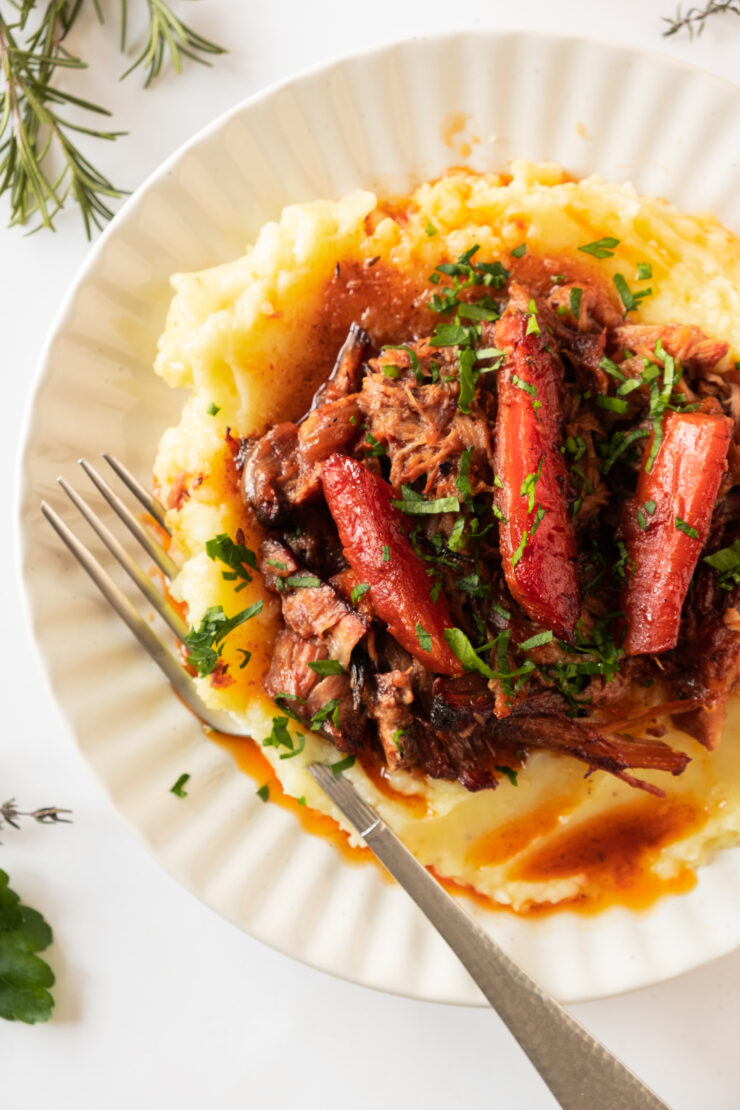
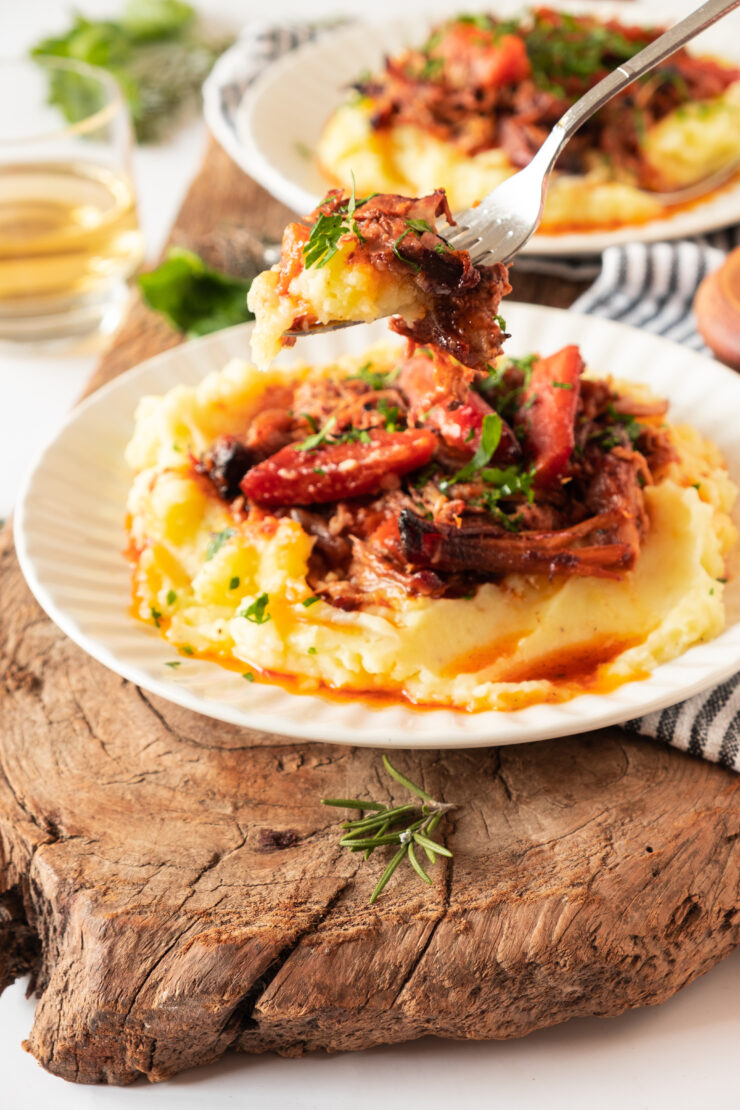
- Serve: Remove the roast from the pot and shred or slice. Serve with mashed potatoes, drizzling the rich sauce over the top. Sprinkle with fresh parsley or fresh thyme leaves.
Want to save this recipe?
Ingredient Substitutions
- Pork shoulder: If pork chuck is unavailable, pork shoulder is an excellent alternative. It has the fat and connective tissue needed for slow cooking.
- Olive oil or dairy-free butter: Use either instead of butter. Olive oil works particularly well for browning the pork.
- Parsnips: Replace some or all of the carrots with parsnips for a sweeter, earthier flavor.
- Beef broth, chicken broth or vegetable broth: They all work instead of bone broth.
- Balsamic vinegar: If you prefer not to use wine, substitute with balsamic vinegar for acidity. The flavor will differ slightly, but the result will still be delicious.
- Gluten-free Worcestershire sauce: A small splash can add extra savory depth if desired. Check the label to make sure it’s gluten-free.
Recipe Testing Notes
Here is where I want you to slow down a little. Not the cooking, necessarily, but the process.
I recommend patting the pork dry before seasoning it. Surface moisture makes browning harder, and a good sear is one of the easiest ways to build flavor.
Brown the meat in batches if necessary. Crowding the pot traps steam, which means the pork may turn gray instead of developing that beautiful caramelized crust.
After removing the pork, cook the onions and carrots in the same pot. Stir in the tomato paste and let it cook briefly before adding the red wine. Scrape up the browned bits from the bottom, because that is where much of the flavor lives.
Return the pork to the pot, add the bone broth and herbs, and cover. Cook in a 300°F oven until the meat is fork-tender, generally around 3 to 4 hours for a typical roast, depending on its size and shape.
My biggest lesson with pot roast is this: do not judge doneness by the clock alone. If the pork still feels firm when you test it with a fork, give it more time. Tough meat often needs additional cooking, not less.
Ways to Serve Pork Pot Roast
- Creamy mashed potatoes or celery root mash.
- Roasted root vegetables: Serve with parsnips, carrots, and potatoes for a hearty, seasonal dinner.
- Crusty sourdough bread or seed bread: Perfect for soaking up every last drop of sauce. Leaving sauce behind is a small kitchen tragedy.
- A fall salad: Peppery arugula, thinly sliced apples, toasted walnuts, and a tangy vinaigrette provide freshness and crunch.
- Holiday sides: Roasted Brussels sprouts, mashed sweet potatoes, kale and brussels sprouts salad or braised red cabbage, make a beautiful addition to Thanksgiving or Christmas dinner.
Troubleshooting
- Why is my pork still tough? It probably needs more time. Keep cooking it gently until a fork slides into the meat easily. Tenderness matters more than an exact cooking time.
- Why is my sauce too thin? Remove the pork when tender and simmer the uncovered sauce on the stovetop until it reduces. You can also mash a few cooked carrots into it for additional body.
- Why does my sauce taste too acidic? Let it simmer a little longer to mellow the wine. If needed, add a small knob of butter or a little additional broth. Taste before making adjustments.
- Why did my pork turn out dry? The cut may have been too lean, or you may have cooked the meat at too high a temperature. Choose a well-marbled cut and braise gently, covered. Slice or shred the pork into its cooking liquid to help keep it moist.
Storage
Store the pork and sauce in an airtight container for 3 to 4 days. Freeze cooled portions with plenty of sauce for up to 3 months for best quality. Warm gently on the stovetop or in the oven until the center reaches 165°F. Add a splash of broth if necessary.
Frequently Asked Questions
Can I make pork pot roast in a slow cooker?
Yes. Brown the pork and sauté the vegetables first for the best flavor, then transfer everything to the slow cooker. Cook on low for approximately 7 to 9 hours, or until fork-tender. Timing depends on the roast size and your slow cooker.
Is pork pot roast gluten-free?
It is naturally gluten-free. Check the labels on your broth, tomato paste, and any additional seasonings to make sure they contain no gluten-containing ingredients.
Can I make this recipe dairy-free?
Absolutely. Replace the butter with olive oil or dairy-free butter. You will still get a rich, comforting dish from the pork, vegetables, wine, and broth.
What is the best cut of pork for pot roast?
Pork chuck or pork shoulder is ideal because these cuts benefit from slow cooking. Their connective tissue softens over time, creating tender meat and a flavorful cooking liquid.
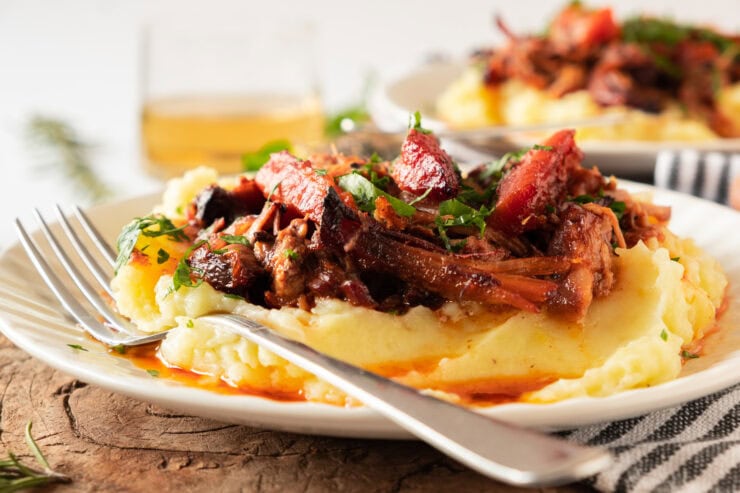
For me, this pork pot roast captures everything I love about cooking: simple ingredients, layers of flavor, and the kind of meal that brings people together. It is slow-cooked, deeply savory, and wonderfully comforting without requiring complicated techniques.
Whether you are looking for a fall recipe, a winter recipe, a special addition to your Thanksgiving table, or a relaxed Christmas dinner, this dish deserves a place in your kitchen.
Make a little extra, invite someone over, and serve it with something that can soak up the sauce. Because the best meals are rarely about perfection. They are about the people gathered around the table, the stories shared between bites, and that moment when everyone goes quiet because dinner is just that good.
Slow-Cooked Pork Pot Roast
Ingredients
- 4 lbs Pork chuck
- 3 tbsp Butter or olive oil
- 2 Onions large, sliced
- 4 cloves Garlic minced
- 6 Carrots medium, cut into chunks
- 1 1/2 cup Red wine or an additional 1 cup of beef broth and 1/2 cup of balsamic vinegar
- 2 tbsp Tomato paste
- 3 sprigs Rosemary
- 4 sprigs Fresh thyme
- 3 tbsp Garlic granules
- 1 tbsp Dried thymes
- 1 tsp Smoked paprika or more if needed
- 1 tbsp Brown sugar
- Salt and pepper to taste
Instructions
- Prepare the Pot Roast: Season the pork meat generously with salt and black pepper. Heat butter in a large cast iron pan or a Dutch oven over medium-high heat. Sear the roast on all sides until browned (about 4–5 minutes per side). Remove and set aside. 2. Sauté the Vegetables: In the same pot, add the onions. Sauté for 5 minutes until softened. Add garlic and cook for another minute. 3. Deglaze and Simmer: Add the dried spices (garlic powder, smoked paprika, and dried thyme). Add tomato paste, then pour in red wine, scraping the bottom of the pot to loosen any browned bits. Add beef broth, Worcestershire sauce, rosemary, thyme, and bay leaves. Return the roast to the pot.4. Cook the Pot Roast: Preheat oven to 390F. If you used a cast iron skillet for the above steps, transfer the softened onions to a large pot like a casserole. If you are using a Dutch oven, continue cooking in it. Add the carrots and Worcestershire sauce. Top with the pork and fresh herbs (thyme and rosemary). Place in the oven for 3 hours or until the meat is cooked through and the sauce is thick and sticky.5. Serve: Remove the roast from the pot and shred or slice. Serve with mashed potatoes, drizzling the rich sauce over the top. Sprinkle with fresh parsley or fresh thyme leaves.
Nutrition
Love My Content? Buy Me a Coffee!
Creating these resources for you is my passion, and I love hearing how they’ve helped you on your health journey. If you appreciate my content and want to support my work, you can buy me a coffee to help fuel more tips, recipes, and inspiration. Every little bit means the world to me!