Polish Dill Pickles (Ogórki Kiszone)


Learn how to make traditional Polish dill pickles, or ogórki kiszone, at home. These crunchy, sour, salty fermented cucumbers are easy, budget-friendly, and full of traditional Polish flavor.
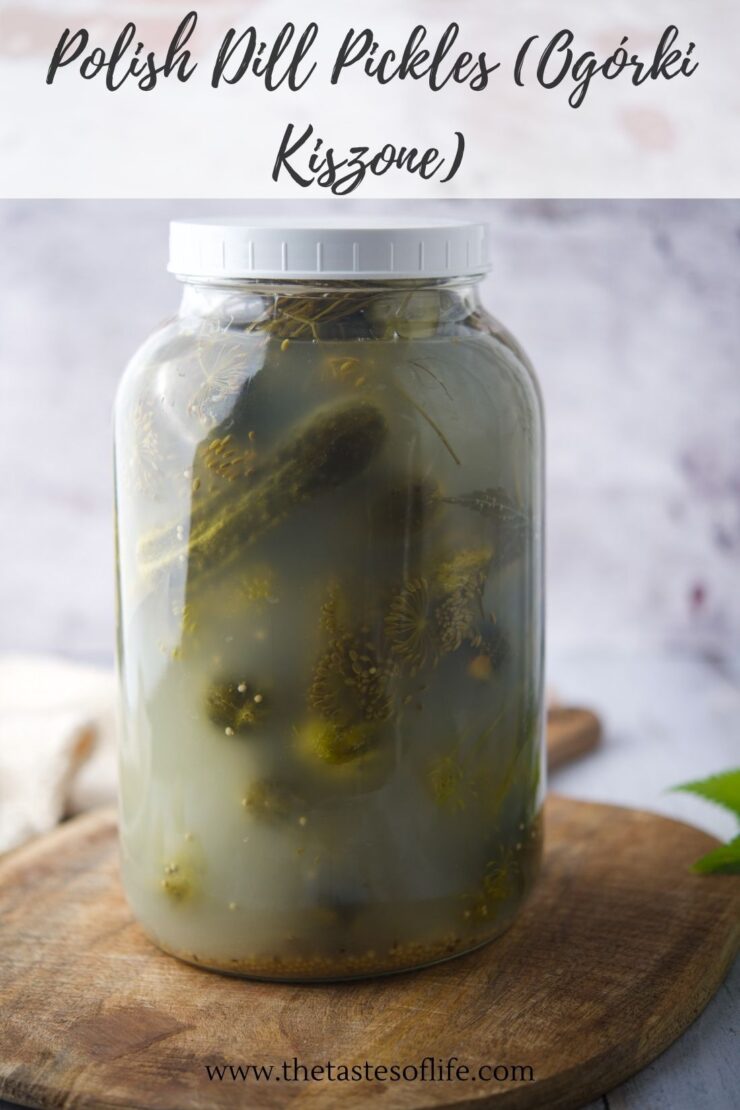
Polish Dill Pickles (Ogórki Kiszone)
There are foods you eat because they’re delicious, and then there are foods that somehow carry an entire piece of your childhood inside them.
For me, that food is pickles. The ones that aren’t sweet but crunchy and sour!
Oh my gosh, I love pickles. They are honestly one of my favorite foods in the world. And I’m not talking about the sweet, vinegary pickles you might find on an American grocery store shelf. I mean real Polish dill pickles, “ogórki kiszone,” sour, salty, garlicky, incredibly crunchy cucumbers that have been fermented until they develop that wonderful tang. Pickles are one of the Polish foods that you cannot skip.
As a nutrition consultant and chef, I love them for what they bring to a meal. But as a Polish woman, I love them because they take me straight home.
Summer Pickling in Poland
I was raised on pickles.
When I was a child in Poland, summer meant going to the farmers market and buying cucumbers for pickling. And when I say we bought a lot, I mean a LOT. We had so many cucumbers that we washed them in the bathtub.
Yes. The bathtub.
When you’re a kid, this seems completely normal. Of course you wash vegetables in the bathtub when you have mountains of cucumbers covering the kitchen. Obviously. We made jars and jars of pickles to last through winter. But we also made what we called half-pickles for summer.
Those were the impatient pickles.
We put fresh cucumbers into jars with dill, garlic, salt, and water, then placed them on the windowsill so they could ferment faster. We didn’t want to wait months. We wanted pickles now. Those are some of my favorite childhood memories.
My grandmother made the best pickles because hers were always, always crispy. And that is my number-one rule when it comes to Polish dill pickles: they need to crunch! If I bite into a pickle and it’s soft and floppy, I am disappointed. A Polish pickle should make that satisfying little crunch when you bite into it.
Now that I live in the United States, Bubbie’s pickles remind me of the ones I grew up eating. If you want to buy a really good fermented dill pickle instead of making your own, that’s the brand I recommend.
But if you want to experience the magic of making your own homemade Polish pickled cucumbers, this is incredibly simple. And you don’t need fancy equipment.
Why This Recipe Works
They are easy to make. The sour flavor comes naturally from fermentation. You need good cucumbers, fresh dill, garlic, salt, water, and a few simple additions. That’s it.
The salt creates an environment where beneficial lactic acid bacteria can thrive while helping protect the cucumbers during fermentation. Over several days, the cucumbers transform from fresh and mild into something wonderfully sour, salty, garlicky, and complex.
And the best part? You get to control how sour they become.
I personally prefer my ogórki kiszone quite sour and very crunchy. If you’re new to fermented pickles, start tasting them after a few days and decide when they taste right to you.
This is not a recipe where I want you obsessing over the calendar. Taste your pickle. Your pickle will tell you when it’s ready.
Ingredients for Polish Dill Pickles (Ogórki Kiszone)
This website may contain affiliate links, which means I may earn a small commission at no extra cost to you if you purchase through these links. As an affiliate, I only recommend products or services I genuinely use and love. Check the affiliate disclosure here.
Did you know?
Pickling cucumbers are small, firm cucumbers grown specifically for pickling. They have thin skin, fewer seeds, and a crisp texture that helps them stay crunchy during fermentation. For Polish dill pickles, small fresh cucumbers are best.
Want to save this recipe?
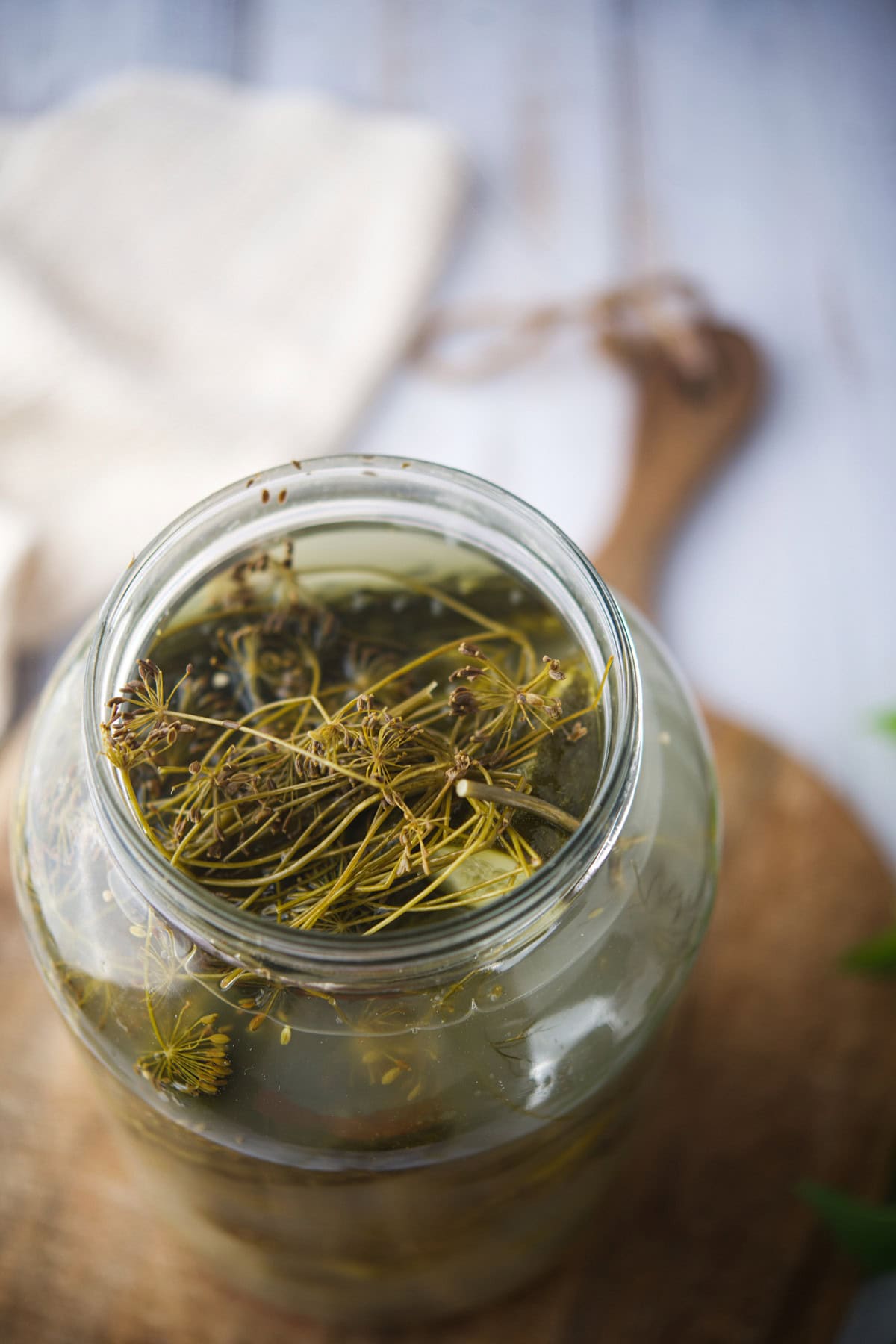
How to Make Polish Dill Pickles (Ogórki Kiszone)
- Wash your cucumbers well and trim a very small amount from the blossom end.
- Wash your fermentation jars thoroughly. I usually like to use a 2-gallon jar, but you can use smaller mason jars.
- Place some fresh dill and garlic in the bottom of the jar.
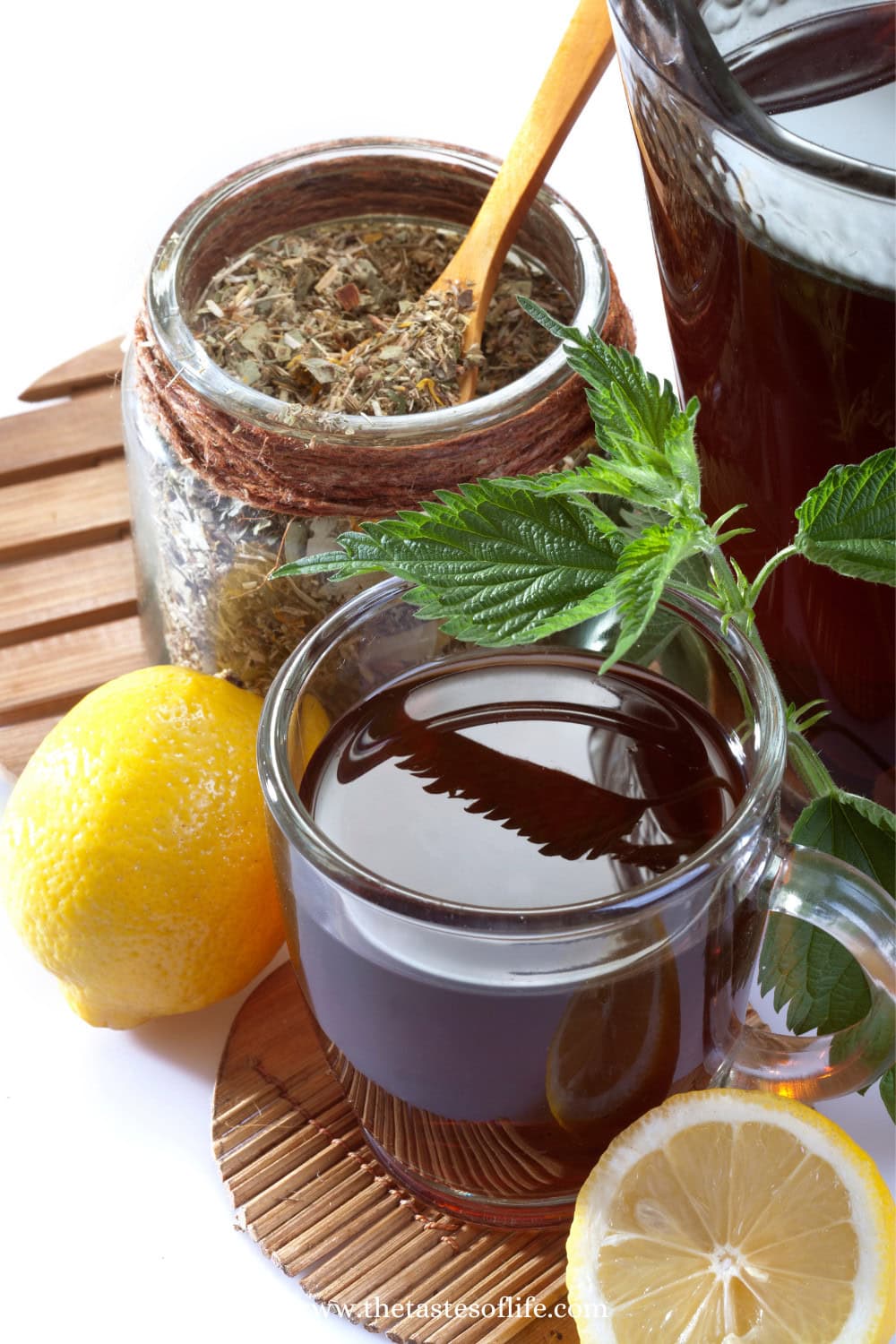
- Add a few peppercorns and a nettle leaf if you’re using one.
- Pack the cucumbers tightly into the jar in a layer. Just make sure not to crush them.
- Repeat this twice if you are using a big jar. If you are using a smaller one just do this process once.
- Don’t crush them, though. We’re going for packed, not pickle traffic jam.
- Dissolve the salt in lukewarm water in a large bowl.
- Pour the brine over the cucumbers until they are completely submerged. This is important. Anything sticking above the brine has a much greater chance of developing unwanted mold.
- Place a fermentation weight or another appropriate weight on top to keep the cucumbers underneath the brine.
- Cover the jar with a lid. The cucumbers should remain submerged throughout the fermentation.
- Leave the jar at room temperature away from direct sunlight.
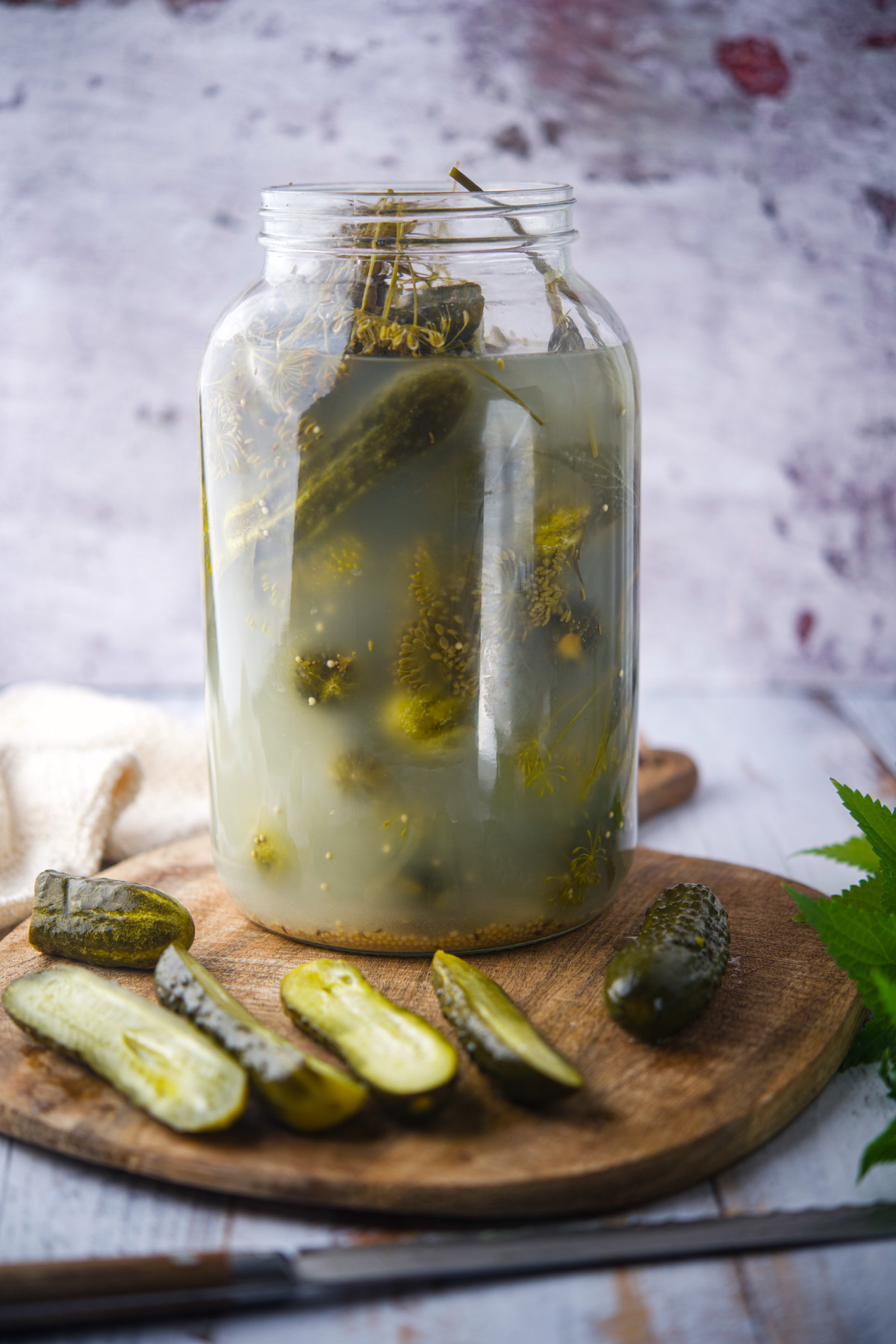
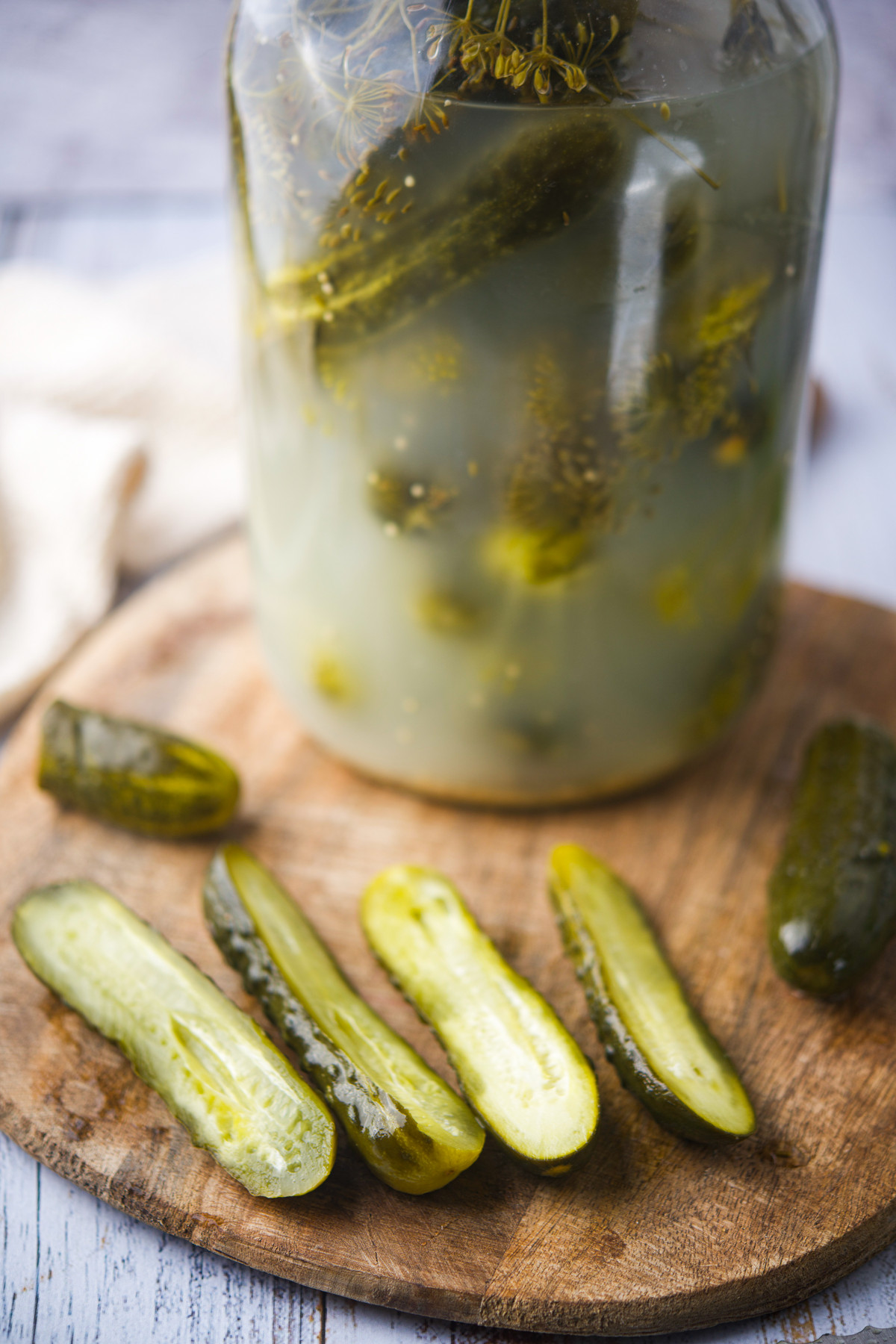
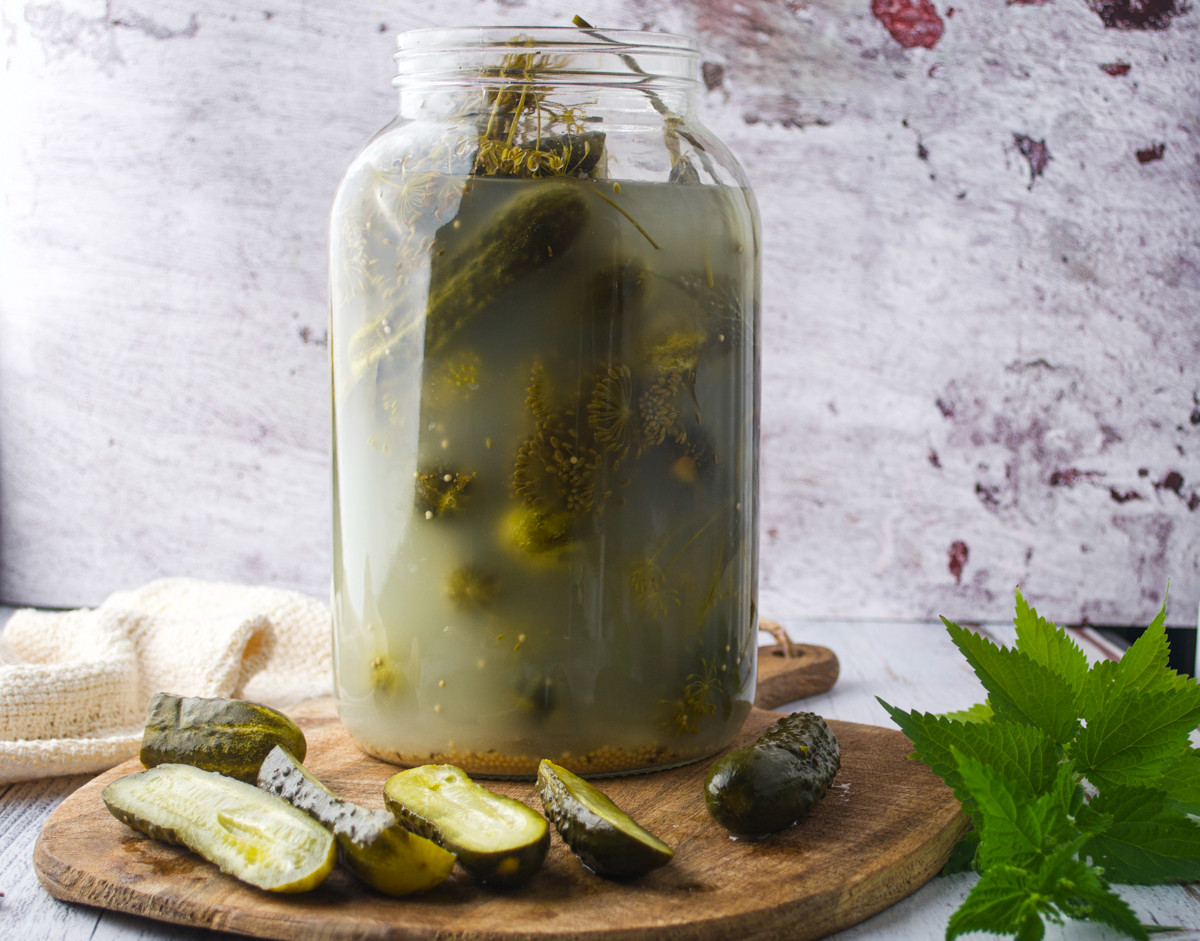
- You’ll start to notice changes. The brine may become cloudy. Tiny bubbles may appear. The cucumbers will begin developing that unmistakable sour aroma.
- Start tasting after several days. When they’re sour enough for you, move the pickles to the refrigerator to slow fermentation.
Recipe Testing Notes
The biggest lesson I’ve learned from making pickles over the years is that crunch starts before fermentation even begins. Use the freshest, firmest cucumbers you can find. Farmers market cucumbers are wonderful because they often go from field to kitchen much faster than supermarket cucumbers.
I also don’t like making the brine with hot water. Lukewarm is plenty.
Another thing I learned from my grandmother is to give the cucumbers enough room to be surrounded by brine but pack them tightly enough that they don’t float around.
And don’t panic when the brine gets cloudy. Cloudiness is often a normal part of lactic acid fermentation. A good fermented pickle should smell pleasantly sour, salty, garlicky, and fresh. If you see fuzzy mold, unusual colors, or smell something truly rotten or putrid rather than pleasantly fermented, don’t taste it. When fermenting at home, use clean equipment and follow safe fermentation practices.
Ways To Serve
- With a traditional Polish dinner – Serve them alongside roasted meat, mashed potatoes, sausages, or cabbage dishes. Their acidity cuts beautifully through rich foods.
- With pierogi – Especially wonderful alongside savory pierogi.
- With sandwiches – Add a few slices to a sandwich bread for crunch and acidity.
- With red wine braised beef, or sweet potato shepherd’s pie.
- With pâté or meat – The sourness balances rich, fatty foods perfectly.
- For a Polish breakfast, put on a plate eggs, sourdough bread, cheese, or cold cuts.
- Add it to salad: tuna salad, Polish vegetable salad, Polish potato and egg salad, Polish tomato and dill pickles salad.
- Make Polish dill pickle soup or delived egg dip or with pyry z gzikiem (Potatoes with Farmer’s Cheese Dip)
- Straight from the jar – My favorite serving method. Sometimes the pickle doesn’t even make it to the plate.
Troubleshooting
- My pickles aren’t crunchy: Start with very fresh, firm cucumbers. Trim the blossom ends and avoid over-fermenting them. Temperature can also make a difference; warmer fermentation tends to happen faster.
- My brine is cloudy: That can be completely normal during fermentation. Lactic acid fermentation often makes the brine cloudy.
- My pickles are floating: Use a fermentation weight to keep them submerged. Anything above the brine is more vulnerable to mold.
- My pickles aren’t sour enough: Give them more time at room temperature and taste them regularly.
- My pickles became too sour: Move them to the refrigerator once they reach the flavor you like. Cold temperatures slow the fermentation process considerably.
Storage
Once the pickles have reached the flavor you want, refrigerate them to slow fermentation. Keep the cucumbers under the brine.
FAQ
What are Polish dill pickles called?
Traditional Polish fermented dill pickles are called ogórki kwaszone or ogorki kiszone. “Kiszone” refers to the fermentation process, which gives the cucumbers their characteristic sour flavor.
Are Polish pickles sweet?
No. Traditional ogórki kiszone are not sweet. They are sour, salty, garlicky, and crunchy. If you’re expecting an American-style sweet pickle, these are a completely different experience.
Are Polish pickles budget-friendly?
Very. Especially when cucumbers are abundant at the farmers market. Pickling is one of those wonderfully old-fashioned ways to preserve a seasonal ingredient without spending a fortune.
Are fermented pickles good for gut health?
Yes! Fermented foods are great for your gut health!
Are Polish dill pickles paleo, gluten-free, dairy-free, keto, or Whole30?
Plain fermented cucumbers made with cucumbers, dill, garlic, salt, and water are naturally gluten-free and dairy-free and generally fit keto and paleo-style eating. Whole30 compatibility can depend on the specific program rules and ingredients, so check the current program guidelines if that matters to you.
If you’ve never made them before, I hope you try.
Find some beautiful, firm summer cucumbers, grab a bunch of dill, smash a few cloves of garlic, make your salty brine, and let fermentation do its wonderfully old-fashioned work.
Then, when you open that jar and hear the crunch?
You’ll understand why I love them so much.
Polish Dill Pickles (Ogórki Kiszone)
Ingredients
- 20 Pickling cucumbers or more for a large jar depending on teh size
- 15 cloves Garlic
- 2 cups Nettle leaves optional
- Fresh stem dill with seeds
- 20 Black peppercorn
- 2 tbsp Mustard seedes
- 3 inches Horseradish root sliced, optional
- 1/2 gallon Water
- 6 tbsp Common salt non-iodized!
Instructions
- 1. Boil water and leave it to cool. 2. Wash your cucumbers well and trim a very small amount from the blossom end.3. Wash your fermentation jars thoroughly. I usually like to use a 1-gallon jar, but you can use smaller mason jars.3. Place some fresh dill, horseradish, and garlic in the bottom of the jar. Add a few peppercorns, mustard seeds, and a nettle leaf if you're using one. Pack the cucumbers tightly into the jar in a layer. Just make sure not to crush them. 4. Repeat this twice if you are using a big jar. If you are using a smaller one, do this process once (depending on the size of the cucumbers).5. Dissolve the salt in lukewarm water in a large bowl.6. Pour the brine over the cucumbers until they are completely submerged. This is important. Anything sticking above the brine has a much greater chance of developing unwanted mold. 7. Place a fermentation weight or another appropriate weight on top to keep the cucumbers underneath the brine. Cover the jar with a lid. The cucumbers should remain submerged throughout the fermentation.8. Leave the jar at room temperature away from direct sunlight. You'll start to notice changes. The brine may become cloudy. Tiny bubbles may appear. The cucumbers will begin developing that unmistakable sour aroma.9. Start tasting after several days. When they're sour enough for you, move the pickles to the refrigerator to slow fermentation.
Nutrition
Love My Content? Buy Me a Coffee!
Creating these resources for you is my passion, and I love hearing how they’ve helped you on your health journey. If you appreciate my content and want to support my work, you can buy me a coffee to help fuel more tips, recipes, and inspiration. Every little bit means the world to me!