Slavic Christmas Eve Traditions: Polish Pagan Roots

Discover how Polish Christmas Eve traditions, from twelve dishes to kutia, trace back to Slavic winter solstice rites and pagan beliefs.
Slavic Christmas Eve Traditions: Polish Pagan Roots
As days grow shorter and winter’s chill settles in, Slavic communities across Eastern Europe come together to celebrate the Winter Solstice – a midwinter celebration, a time for reflection and anticipation. Rich in cultural heritage, Slavic traditions during this season are steeped in folklore, mysticism, and a deep connection to nature.
The time is approaching when most Polish families will sit down for traditional Christmas Eve dinners. Few know that the “pagan Christmas Eve” is not an oxymoron but a disguised reality.
Most people are convinced that all cultivated traditions are Christian; after all, they relate to Christmas, the celebration of the birth of Jesus Christ. However, if someone thinks carefully, they would realize that traditional Polish Christmas Eve has relatively few strictly Catholic elements. At the same time, the most important customs are relics of old pre-Christian beliefs.
The holiday’s timing was chosen deliberately, spanning December 21-22 to January 6; the winter solstice has been a magical and miraculous time since the dawn of humanity. This period marks the shortest day and the longest night of the year, a critical moment when people anxiously awaited the sunrise. As the Sun rose and the days grew longer, people rejoiced and celebrated, seeing it as a sign that the forces of light and good had won over darkness and chaos. Among the ancient Romans, this festival was dedicated to Saturn, called Saturnalia. Among the Germanic tribes, it marked the birth of the God Jule, and in Persia, the coming of the sun god Mithra. Everywhere, the celebration included rituals symbolizing the Sun, fire, and light.
For the Slavs, this holiday was called Godami, Kres, or Stado, and they celebrated it as a harvest and death festival. People lit bonfires for the dead so souls could warm themselves, and they held ritual feasts in cemeteries. Because people believed the wandering spirits of the deceased could incarnate into domestic animals, today’s custom of feeding animals with the Christmas wafer likely connects to this belief, after which they are thought to gain the ability to speak in a human voice for one night. The winter solstice is also a time when people make predictions about the course of the entire upcoming year: the weather, crop abundance, success in love, etc.
Church leaders consciously set the day to celebrate Jesus’ birthday at the end of December, and they also purposely gave new symbolism to pagan rituals that had been practiced for hundreds of years. Since the dawn of time, man has clung to tradition, but human memory is unreliable, making it easier to teach someone a different interpretation of a ritual he already knows than to force him to abandon a tradition cultivated for centuries. However, it is time to remember the true symbolism of pre-Christian rituals, ancient winter solstice traditions that have survived to this day.

An empty seat at the table
A vital custom still practiced in Polish homes is to set one extra place at the Christmas Eve table. It is commonly believed to be intended for a lost wanderer who did not reach his home in time for the Christmas Eve supper. However, communication between cities in Poland (and even the world!) is now so well organized that no one today has the opportunity to invite such a wanderer into their home. Moreover, people nowadays are rather closed off from strangers, making it very easy to refuse to welcome such a wandering stranger. This is probably why we hear more and more often today that an empty place at the table is intended for family members who, for various reasons (e.g. work abroad), cannot participate in the Christmas Eve supper.
This belief partly reflects what the ancient Slavs believed: they also prepared additional coverings for family members. The difference, however, is that among the Slavs, this place was intended for deceased family ancestors, the so-called “Dziady,” who could communicate with our world during the Winter Solstice celebration. The spirits of the ancestors eagerly took advantage of this opportunity, making the holiday feast an opportunity for the entire family to unite at one table.
Hay under the tablecloth
The celebration of ancestors was also associated with the tradition of placing the first sheaf of oats, wheat, or unthreshed rye from the previous year in the corner of the room during the holidays, the so-called diducha (literally: grandfather ), which was also supposed to symbolize the presence of family ancestors during festive activities. Diduch is the Eastern Slavic equivalent of a Christmas tree with vibrant symbolism. In addition to reminding people of deceased family members, it repelled evil forces. It also prophesied a good harvest in the coming growing year. Over time, diduch even became a national Ukrainian Christmas Eve tradition, which is why years ago, it accompanied Ukrainian families from Christmas Eve to Epiphany.
Another way to ensure prosperity was to place hay under the tablecloth during the feast, which was treated as an offering to the vegetation deities.
Interestingly, over time, the amount of hay during the Christmas Eve supper began to decrease to an increasingly symbolic level. In ancient times, hay was spread under the tablecloth and around the entire table. Seeds were also scattered in the same places, the symbolism of which was obvious for the Slavs who lived off agriculture. For a long time after the advent of Christianity, the hay was also used in traditional Christmas fortune-telling: pulling out a green blade heralded health; one with ears, abundance; and the dry one, upcoming problems.
Decorating the tree
Another Slavic equivalent of a Christmas tree is the so called podłaźniczka or podłaźnik – a cut-off part of pine, fir and spruce, which in the ancient past was hung from the ceiling and then decorated with apples, nuts, cookies, candles and chains. The host of the house, wanting to appease the dangerous forest demons, went to the forest before Christmas – a magical and mysterious zone over which man could never have complete control. All this was done to cut down the top, or at least the handsome branch, of a selected coniferous tree, symbolizing endless, constantly reborn life after being moved to the house.
Individual decorations in the Slavic tradition carried symbolism: apples ensured health and beauty, nuts represented wealth and vitality, baked goods signified abundance, candles protected against evil forces, and chains symbolized family ties. Over time, Slavic lands replaced the Christmas tree, apples with red or gold baubles resembling them, candles with lights, and nuts with other smaller decorations.
The Christmas tree in the home may reflect the concept of axis mundi (axis of the world), popular in pagan beliefs. Today, however, the Christmas tree is most often associated with the biblical tree of the knowledge of good and evil. Its decorations take on Christian meaning: lights, the light of Christ; chains, the bonds between man and God. In both pagan and Christian beliefs, lighting the tree was intended to help travelers find their way home.

Christmas Eve feasting and the symbolism of twelve.
Most remnants of pagan beliefs appear on the Christmas Eve table: twelve dishes, many of which originate from the old “tryzny” (today: wake) celebrations. The best example of an old All Souls dish that has become well-established on the Christmas Eve table is kutia, made from bruised wheat, poppy seeds, malt, honey, dried fruit, nuts, and raisins, and, in Slavic tradition, usually served richly with whatever you can. This was done to ensure a good harvest and abundance the following year. People also brought ingredients such as poppy seeds, peas, beans, broad beans, wheat, fruit, mushrooms, and honey to loved ones’ graves.
Some of these ingredients have become a permanent element of Christmas Eve dishes: dumplings, Polish pierogi, and baked cakes (e.g., poppy seed cakes or strudel). Dishes with mushrooms and forest fruits also appease forest demons and others living in the thicket of devils.
Want to save this recipe?
Today’s custom of preparing 12 Christmas Eve dishes is a remnant of pagan harvest thanksgiving. Why 12? Well, because we had to thank the gods for the whole year, all twelve months. An important relic of pagan faith is also the care that the Christmas Eve feast is lavish and generous. Traditional overeating during the feast was supposed to help the Sun fight the forces of darkness.
What do Slavs Eat for Christmas Eve?
In Poland, this celebration is called Wigilia, and the table is filled with humble, flavorful dishes. Traditionally, the meal is meatless, reflecting the Christmas Eve fast. Every dish has its own meaning, and many ingredients are connected to old harvest and winter-solstice traditions, symbolizing prosperity, health, abundance, and a good year ahead
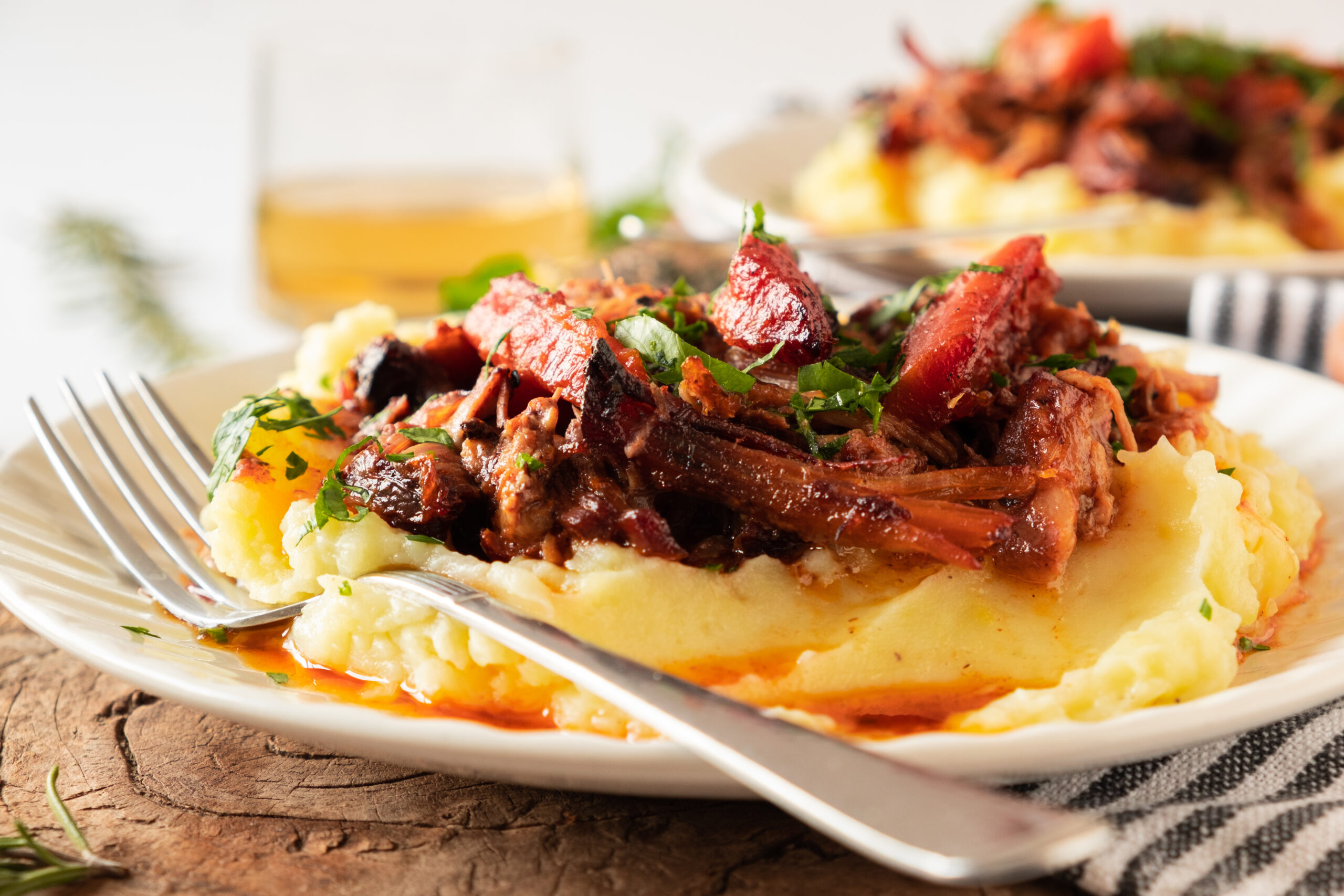
You might find beetroot soup (barszcz czerwony) served with little mushroom-filled dumplings called uszka, or a creamy wild mushroom soup, pierogi filled with sauerkraut and mushrooms, braised sauerkraut, fried or baked carp, herring prepared in different ways, and fish in a vegetable sauce known as ryba po grecku. There are also dishes made with poppy seeds, honey, dried fruit, and nuts, such as kutia or makowiec, along with dried-fruit compote (kompot z suszu), a sweet-tart drink made from dried apples, pears, plums, and sometimes apricots. The aromas of mushrooms, cabbage, beets, and spices make the whole house smell like Christmas.
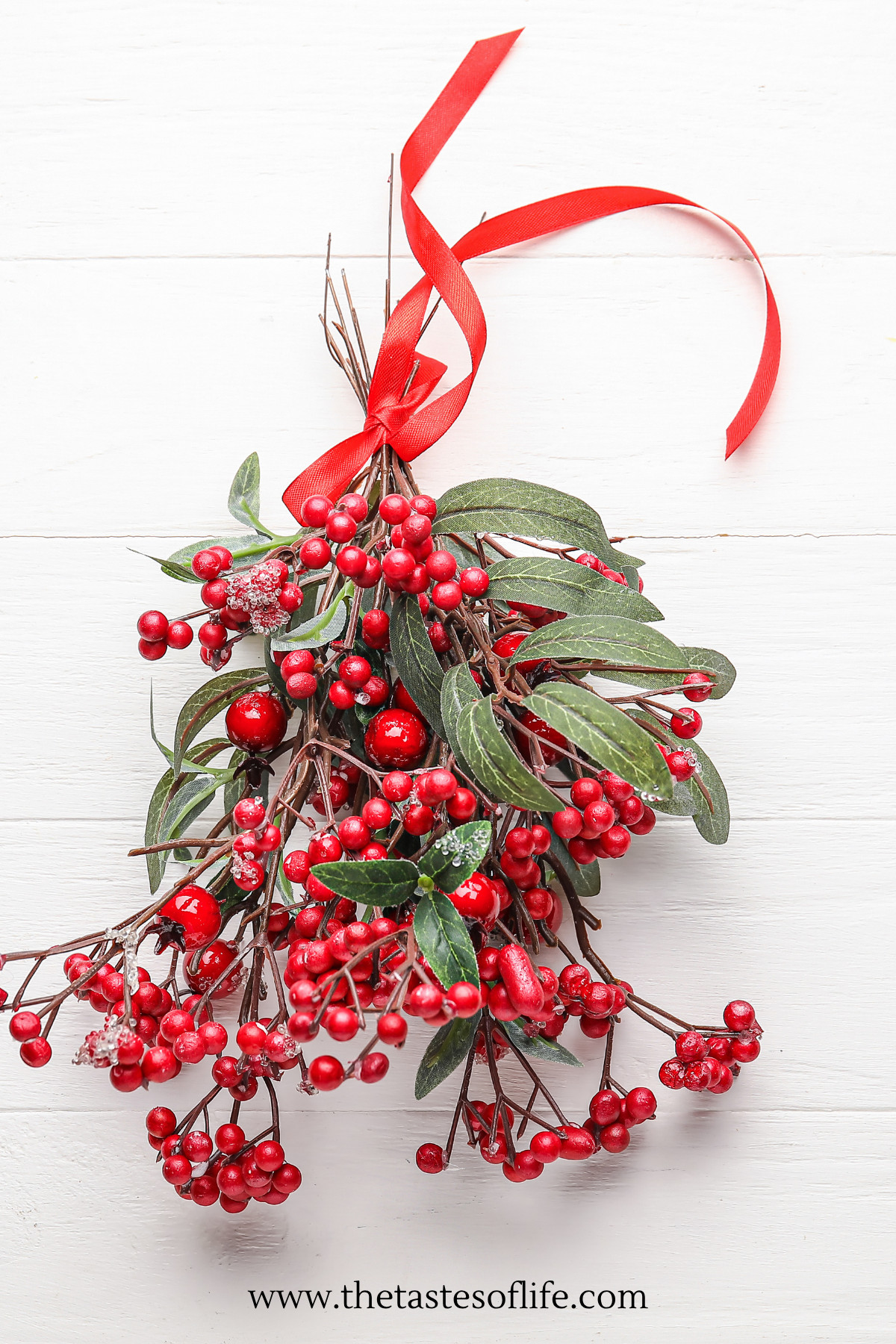
Mistletoe
The Christmas tradition of hanging mistletoe (one of the ancient celebrations of winter solstice) from the ceiling came to us similarly to Halloween; we adopted it through American culture, but its roots trace back to the beliefs of the ancient Celts. Mistletoe was considered a gift from the gods and believed to have magical properties. Specimens growing on oak trees were believed to have extraordinary power and were particularly popular. Cutting mistletoe was once an important ritual. Druids recommended collecting it on the night of the winter solstice and sometimes at the turn of spring and summer. Cutting mistletoe shoots could cure diseases, but hanging them from the ceiling protected against evil forces and fire. Mistletoe is therefore another predecessor of today’s Christmas tree (along with the podłaźniczka and diducha).
Ancient peoples believed that mistletoe shoots could bring happiness and wealth to the house. Moreover, they believed it ensured that dreams would come true and also increased sexual potency. Today, couples kiss under the mistletoe, believing it will strengthen their relationships. This is not surprising because mistletoe was once a popular medicine. It was believed to promote fertility and lower blood pressure. Hanging mistletoe over the Christmas Eve table or the front door is customary. Don’t throw away the mistletoe after the holidays. It should be dried and stored for a year so that love, prosperity, happiness, and sexual potency do not leave us for the following year.
Animals that speak with human voices
Christmas Eve is also when animals can speak to us with human voices. This belief is related to the concept of the human soul. As this entry already notes, during the Christmas feast, the souls of the deceased are allowed to commune with their loved ones again. Animals can act as intermediaries, carrying the word from such a returning soul. Moreover, in ancient Slavic belief, animals have always held a living position slightly worse than humans. After all, many believed animals also had souls, which is why they understood human feelings. This approach reflected the widespread respect Slavs had for animals, which they valued primarily for their nutrients rather than their meat. Modern reconstructors of Slavic cuisine note that ancient Slavs ate relatively little meat during the year. They prepared it for feasts only on holidays and other important occasions.
Take care of your animals on Christmas Eve. Everyone has a lot of food on this day, so let them eat a little during the holiday. After all, they may need food for themselves and for one of our ancestors’ souls.

Hey, Christmas carol, Christmas carol!
Nowadays, the holiday season is complete only with joyful carol singing about the birth of Jesus Christ. In the old days, caroling meant visiting local houses and wishing for prosperity in the New Year. A donation given by hosts to carolers is called a carol. The carolers’ visit was seen as a good sign, an omen of prosperity and abundance in the coming year. For this reason, the host felt obliged to redeem favors through treats and other donations. Nowadays, it is increasingly difficult to meet a real group of carolers who, apart from singing carols, also express beautiful New Year’s wishes to the host. The element that unites the carolers is the shining star, which in the Christian tradition is associated with the star of Bethlehem, and, in the Slavic tradition, with the newborn Sun, the most important star for man. A caroler holding a star could be called a star or a star .
Contemporary carolers’ costumes are a great cultural and religious mishmash, as they dress as angels, devils, shepherds, the Three Kings, Old Man, Baba, Death, Gypsy, representatives of various professional groups, and so-called monsters whose task was to scare the village inhabitants. The most popular monsters are the turoń, the goat, the bear, and the horse. Rituals related to “mascaras” (e.g., the famous waking of the turon) come from an ancient pagan tradition. They are related to enchanting a new vegetation cycle.
What is Kolenda in Slavic Culture
Kolędy (pronounced koh-LEN-dih) are traditional Slavic Christmas carols that have deep roots in Polish and other Slavic cultures. They celebrate the birth of Christ, but their origins also trace back to older, pre-Christian winter traditions that welcomed the return of light, celebrated the winter solstice, and marked the transition into a new year. In Poland, kolędy are central to Christmas Eve and the entire Christmas season, bringing families and communities together through song. Some are deeply religious and solemn, while others are cheerful, playful, and filled with folk melodies. Traditionally, people sang them at home, in churches, and while visiting neighbors, sometimes accompanied by musicians and kolędnicy (carol singers) dressed in symbolic costumes who traveled from house to house wishing people health, prosperity, and a good harvest in the coming year. Kolędy are more than Christmas songs; they beautifully express Slavic heritage, storytelling, and the importance of keeping traditions alive.
Family atmosphere
The Christmas Eve traditions discussed so far suggest that few strictly Christian traditions remain in contemporary Christmas Eve celebrations. Even the famous Christmas Eve carp became a tradition only in the Polish People’s Republic era because it was cheap and widely available, which was rare then. Pagan influences also appear in the custom of keeping fish scales in a wallet, which is supposed to bring the wallet holder wealth and a constant flow of cash. Which commonly practiced traditions are not modifications of ancient pagan rituals?
Wafer, nativity play, Christmas Eve nativity scenes, and the first star. Very little of it remains. Catholics like to lament the increasing commercialization of holidays. Still, the truth is that the Polish tradition of Christmas Eve has not been predominantly Christian for a long time.
Even the famous festive atmosphere is a legacy of our Slavic forefathers. During the celebration of the Generous Wedding ( Szczodre Gody- a Slavic feast celebrated in Poland during and after the winter solstice) Slavs stopped physical work for almost two weeks to spend time with their families. The belief in a possible connection between worlds made the holidays especially family-friendly for the Slavs because, in addition to living with loved ones, they could also contact those who had already left this world. The pagan celebration was unique because it combined silence and reflection with the joy and grandeur of New Year’s.
It is worth remembering the mixed origins of modern Christmas Eve traditions and winter solstice traditions to realize that everyone can feel joy at this time. The celebration is not dedicated only to Catholics, so non-believers and discontents should stop talking about not liking the holidays. Regardless of faith, the coming time should be used for joy and rest. There are many reasons to be happy: the triumph of light over darkness, the gradually lengthening day, the birth of Jesus Christ, time off from work, lots of tasty dishes, and the opportunity to spend time with family. Even the most die-hard saint-skeptic should choose something for themselves from this pool. Happy Christmas!
More about Slavic winter solstice traditions here.
May you be blessed! 🙂
Love My Content? Buy Me a Coffee!
Creating these resources for you is my passion, and I love hearing how they’ve helped you on your health journey. If you appreciate my content and want to support my work, you can buy me a coffee to help fuel more tips, recipes, and inspiration. Every little bit means the world to me!